What's New at Daytona: January 2026
What's New at Daytona: January 2026
Welcome to What’s New at Daytona! This is a short update on selected product improvements and why they matter. Everything highlighted below is live and ready to use.
SDKs: Ruby & Go
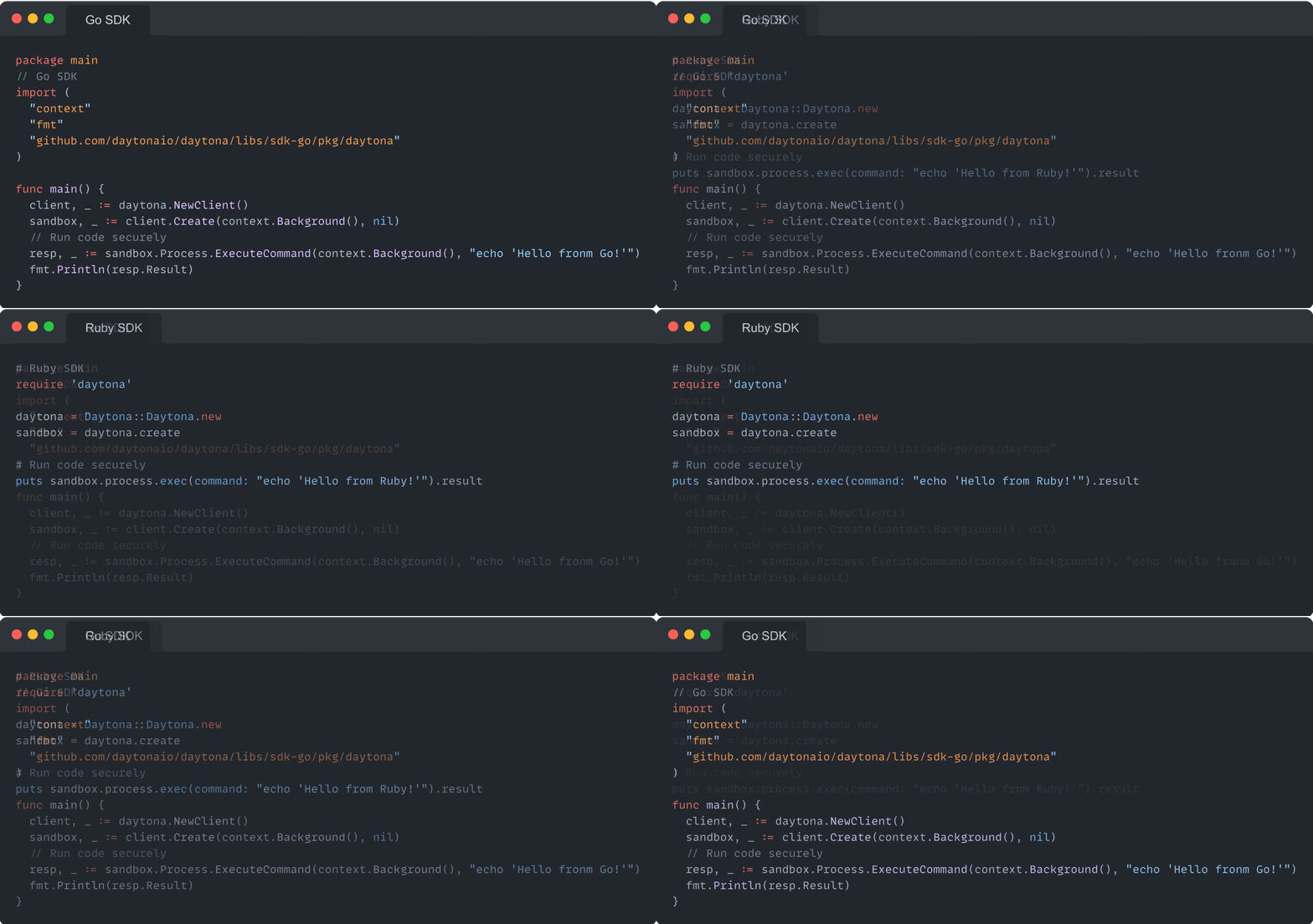
Daytona now ships official SDKs in Ruby and Go so you can drive sandboxes, tooling, and automation from your favorite language.
Whether you are building platform tools in Go or scripting automation in Ruby, these SDKs provide a robust interface for the entire Daytona platform, from sandbox lifecycle and git operations to filesystem management and process execution.
Enhanced API Reference & Schema Transparency
We’ve completely overhauled our API documentation to provide full visibility into request schemas, base URLs, and direct REST integration paths.
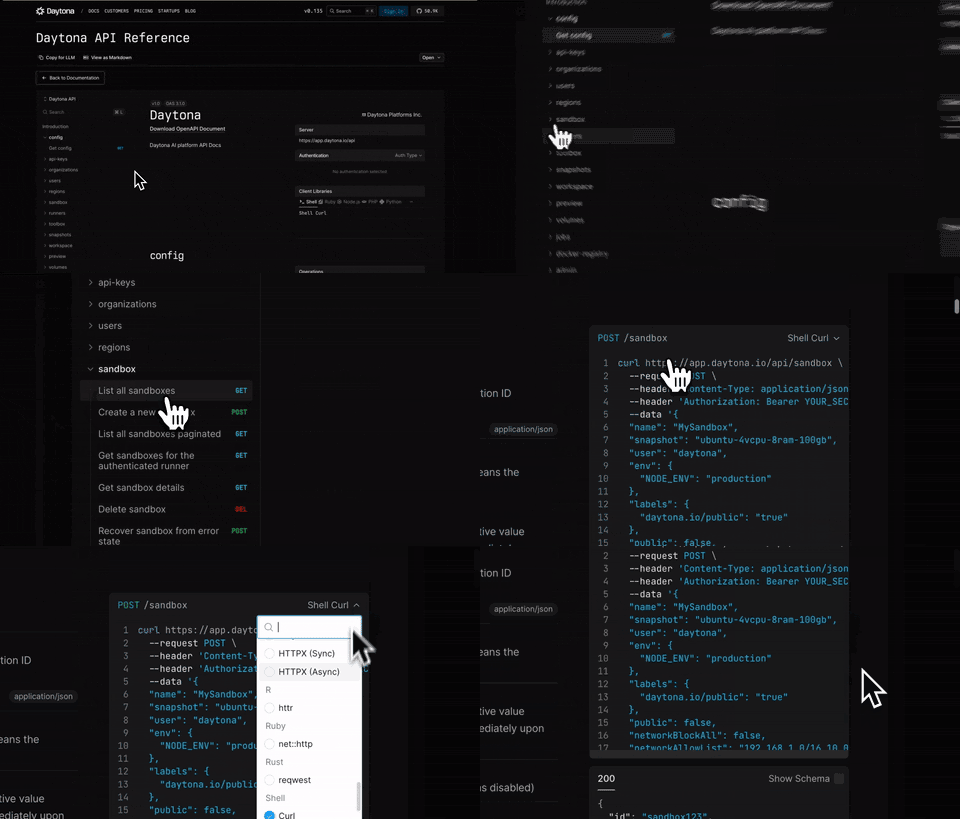
You can now access the API base URL directly, view structured request body examples for all endpoints, and copy ready-to-use cURL commands without relying on the SDK source code.
The "AI Agent" Powerhouse
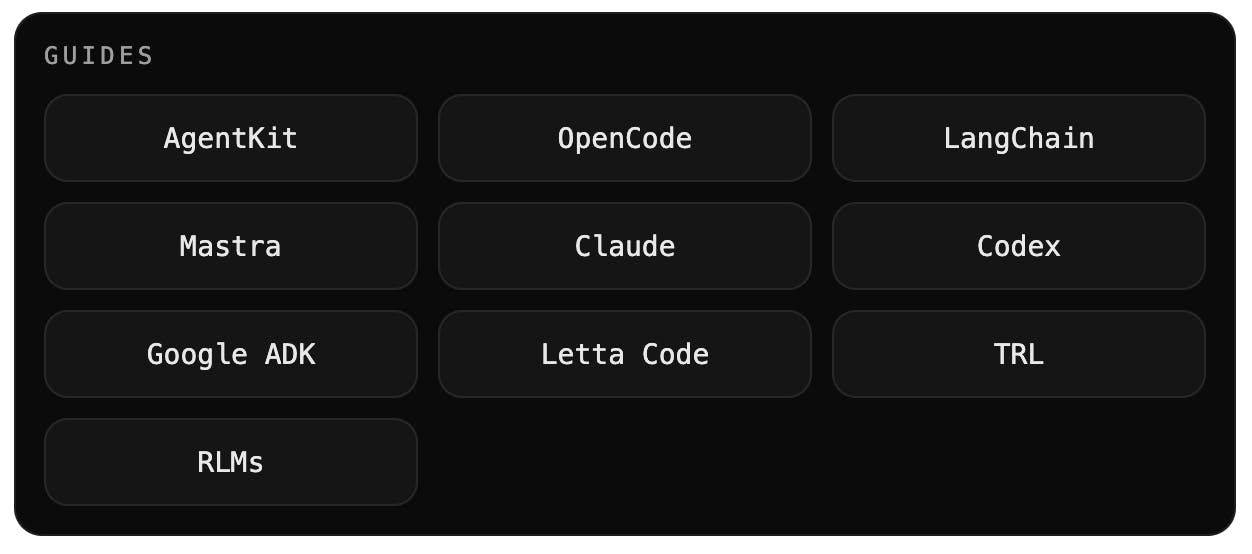
We’ve released a massive suite of new guides and integrations, including Claude Code, Google ADK, Codex, OpenCode, Mastra, and Recursive Language Models—transforming Daytona into the default runtime for secure AI execution.
What’s New:
Google ADK Plugin: Implements a "Generate → Test → Fix" loop where agents must verify code in a sandbox before responding.
Recursive Language Models (RLM): A reference architecture for agents that spawn sub-agents (e.g., 40+ parallel sandboxes scanning a repo simultaneously).
Framework Support: Full guides for Mastra (visual debugging), OpenCode (web-based agent), and OpenAI Codex (CLI-based lunar lander demo).
Claude Code: Run Anthropic’s new CLI tool securely inside a Daytona PTY.
Whether you are building a self-correcting agent with Google’s ADK or a recursive swarm, Daytona provides the ephemeral infrastructure to run them safely.
Customer Managed Compute
Daytona has evolved from a purely managed service into a flexible infrastructure tool, allowing you to run sandboxes on your own hardware or specific cloud regions.
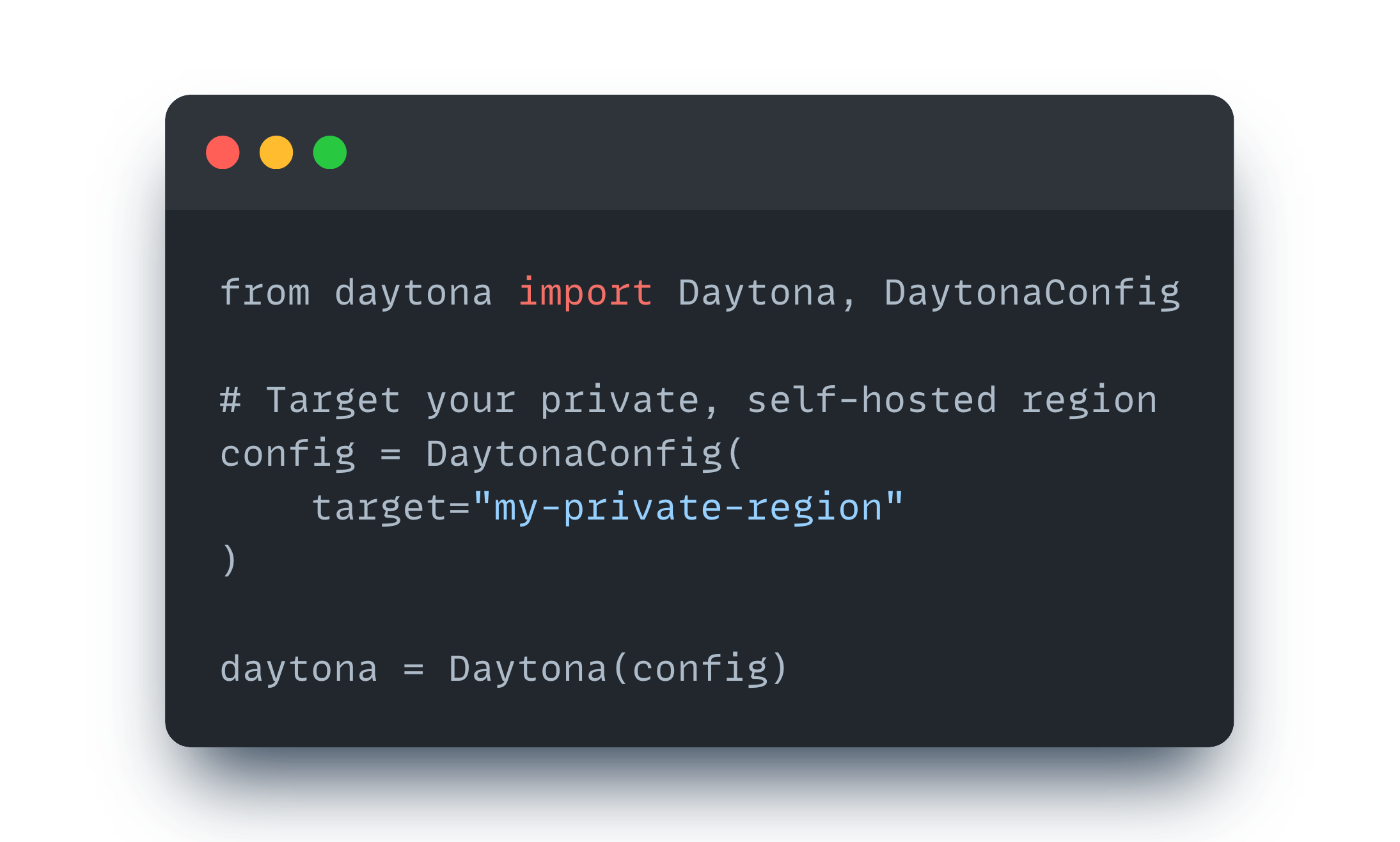
This update introduces Custom Regions and Self-Hosted Runners. You can now group compute resources geographically to reduce latency, strictly adhere to data residency laws, or utilize your own idle hardware.
Shared Regions: Immediate access to Daytona-managed US/EU infrastructure.
Custom Regions: Connect your own runners to the Daytona control plane for total isolation.
Note: Custom Regions are currently an invite-only experimental feature. To request access for your organization, please contact support@daytona.io.
Learn more about Regions & Runners
Dashboard Command Palette
We’ve added a global Command Palette to the web dashboard, bringing keyboard-driven efficiency directly to your Daytona dashboard interface.
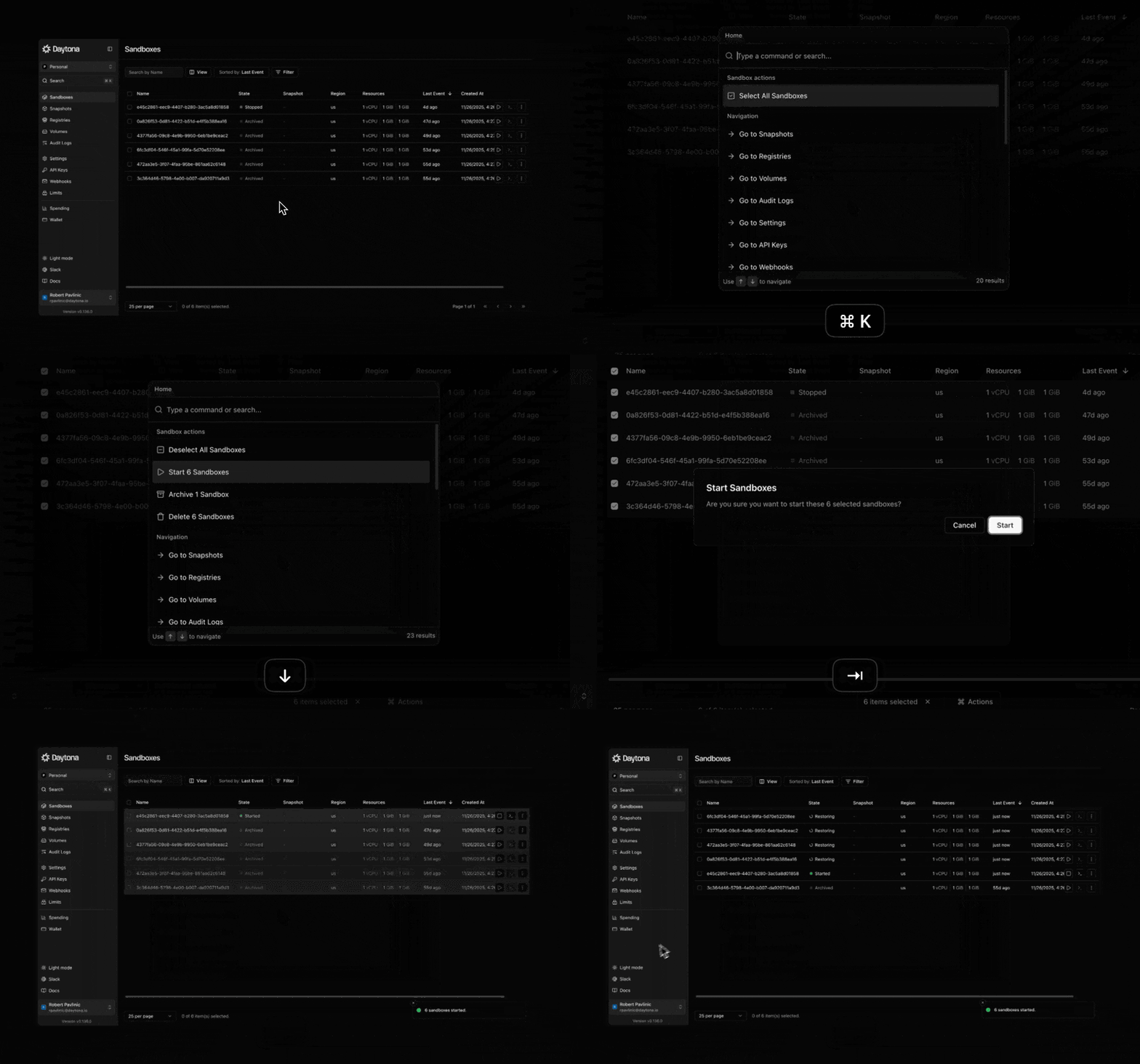
Triggered by Cmd+K (or Ctrl+K), this new productivity tool allows you to navigate between sandboxes, search docs, or access settings instantly—completely mouse-free.
Advanced CLI Control
Direct terminal access is essential for a fluid workflow. You can now use daytona ssh and daytona exec to interact with your sandboxes as if they were local machines.
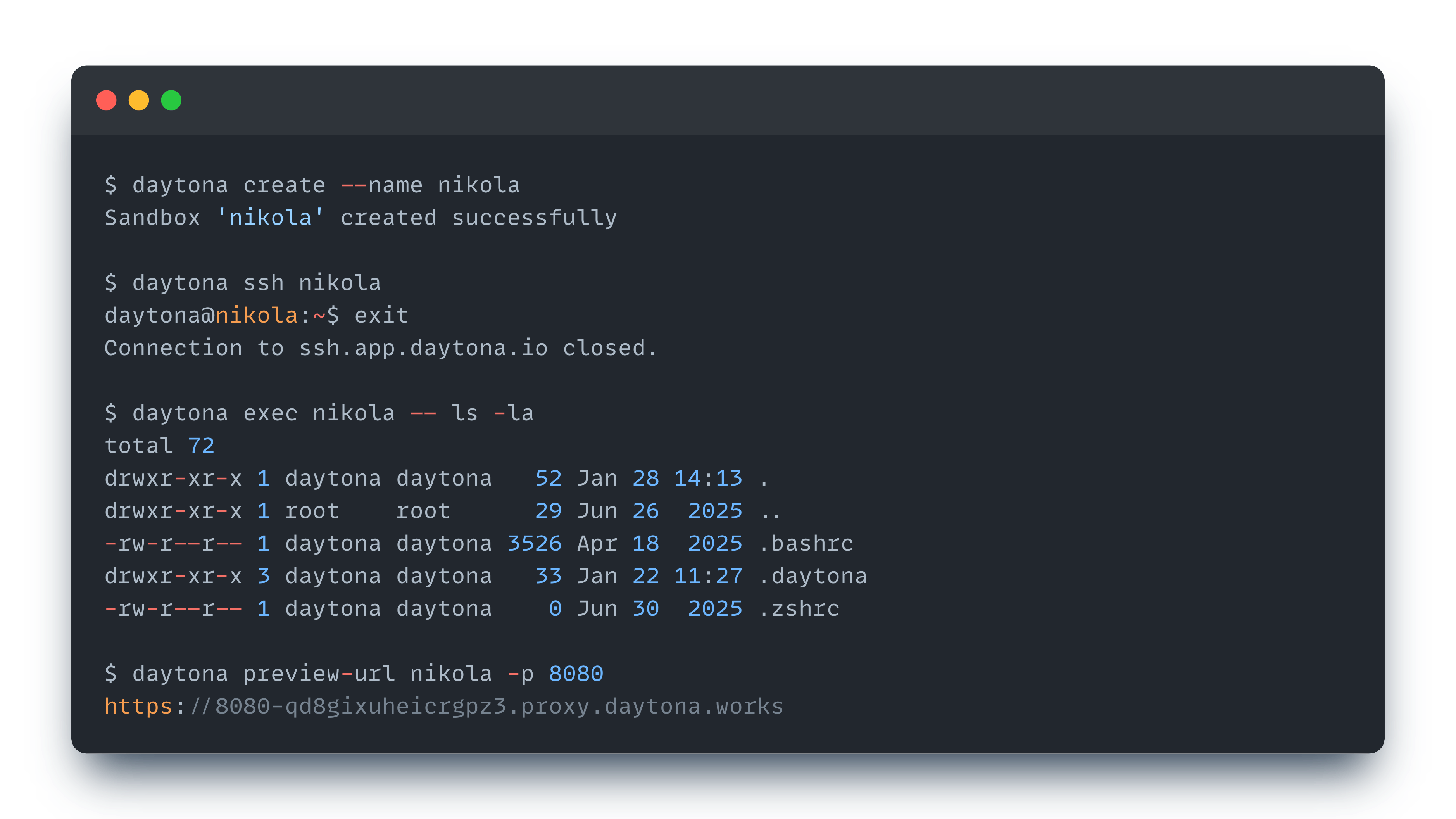
These commands provide a seamless bridge to your remote environment.
Examples:
daytona ssh: Instantly drops you into an interactive shell session.daytona exec: Runs single commands remotely (e.g.,ls -la) with full TTY and signal forwarding.daytona preview-url: Instantly generates a signed public URL for any port, perfect for testing webhooks or sharing progress.
Register for Daytona Compute
Daytona Compute is our flagship in-person conference, hosted at Chase Center in San Francisco on March 8–9, 2026, bringing builders, operators, and AI infrastructure leaders together.